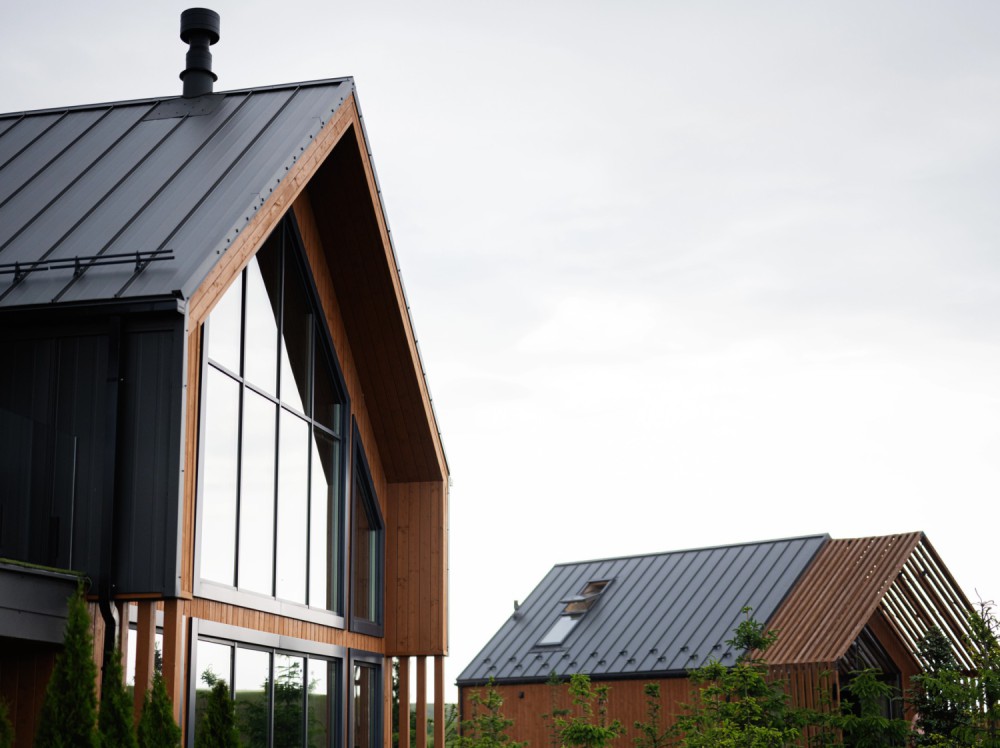
Living in an ultra energy efficient home: this is the dream every homeowner hopes to achieve by embracing the passive house concept. While still relatively rare in Québec, more and more people are intrigued by this type of home.
But two questions frequently come up:
- How realistic an option is this in our northern climate?
- Do you have to be wealthy to own a passive house?
What Defines a Passive House?
Before we answer these two questions, let’s take a closer look at this type of property’s characteristics.
A passive house (or Passivhaus, according to the original German certification) is designed to minimize heating and air conditioning needs. Thanks to exceptional insulation, near-perfect airtightness, and efficient mechanical ventilation with heat recovery, the building maintains a stable indoor temperature all year round.
In winter:
The sun, occupants, and household appliances are often enough to heat the residence! The goal: to reduce energy consumption by up to 90% compared to a conventional home.
In summer:
- The window placement throughout the house is crucial: they’re positioned facing south to minimize heat gain in summer (and maximize it in winter).
- Awnings are also installed on the windows to block the sun’s rays during the day in addition to other structural elements that provide shade, such as roof overhangs (like cornices) and pergolas near the property.
- Deciduous trees are planted to the south, east, and west of the house to protect it from the sun. The position of trees must be carefully considered so as not to interfere with the absorption of sunlight indoors in winter.
- The occupants must also follow a ventilation routine. On summer nights, they open the windows on the ground and first floor to promote air circulation and expel the warm air outside.
It should be noted that heating and air conditioning systems are still installed in some passive houses… just in case!
Can We Adapt the Idea to Our Particular Climate?
This is where it gets complicated.
Québec, with its wide temperature variations, presents a real challenge for energy efficiency. Our freezing winters and sometimes scorching summers put even the best buildings to the test.
However, several projects show that local architects and builders can adjust the concept to suit our province’s environmental conditions. They’ve developed hybrid approaches (triple glazing, even more insulation, etc.) or have integrated high thermal inertia materials into the structure.
Real World Examples in Québec
Passive houses have already been built throughout the province, from Montreal to Gaspé. Here are a few examples:
- Maison Ozalée (Montréal)
- Involving the large-scale renovation of a 1950s bungalow, it’s probably the best-known project and the first Passivhaus-certified residence in Québec. Notable features include triple-glazed windows, highly insulated walls, a very airtight envelope, carefully chosen orientation, and a heat recovery system. The project is also seeking LEED Platinum certification in addition to its Passivhaus certification.
- Maison Passive : S (Nominingue)
- This three-bedroom single-family home is designed to offer fantastic views of Lac Nominingue. It features large south-facing windows, shading systems (pergolas, balcony), double stud framed walls, and cellulose insulation, as well as fibreboard.
- The Norra Hem Projet (Tremblant)
- This is a currently active passive house project (or very low-energy building) on the north side of Tremblant. The floor plan is inverted (bedrooms on the ground floor, living spaces up top) to optimize use of the sloping terrain. It includes large strategic openings to maximize light and solar gains despite the site’s limitations.
- Saltbox Passive House (Bromont)
- This property is a beautiful blend of traditional architecture and high energy efficiency. The project incorporates sustainable materials and aims to provide increased comfort with a well-insulated envelope and high-performance systems.
Additional Advantages
Over and above exceptional energy efficiency, a passive house offers
- unparalleled thermal comfort by eliminating drafts or cold spots;
- healthier air thanks to constant ventilation that filters out dust, pollen, and humidity;
- a higher resale value due namely to virtually non-existent Hydro-Québec bills and the building’s green features.
Elevated Costs and Complicated Planning Process
Of course, there’s no such thing as perfect.
The initial cost remains one of the main barriers. High-performance insulation, specialized windows, and skilled labour are all expensive. And to obtain official Passivhaus certification, strict technical criteria must be met, and experts must be called in.
Another challenge: the need for meticulous planning. Any design error (poor orientation, ineffectual thermal bridges, incorrectly calibrated ventilation, etc.) can compromise the building’s overall energy efficiency. Constructing a passive house isn’t something to be undertaken lightly: every detail counts, from lot selection to door installation.
A Growing Trend
No matter! Governments and municipalities are increasingly interested in promoting this residential building model, particularly through energy efficiency programmes and financial incentives. Some Québec property developers are even planning entire neighbourhoods inspired by the passive house concept for the near future.
Besides, rising environmental awareness among younger buyers is driving them to invest in sustainable housing rather than energy-intensive homes.
So, are passive houses a dream or a reality? Ten years ago, the idea seemed completely unfeasible; today, however, it now feels far more attainable!