
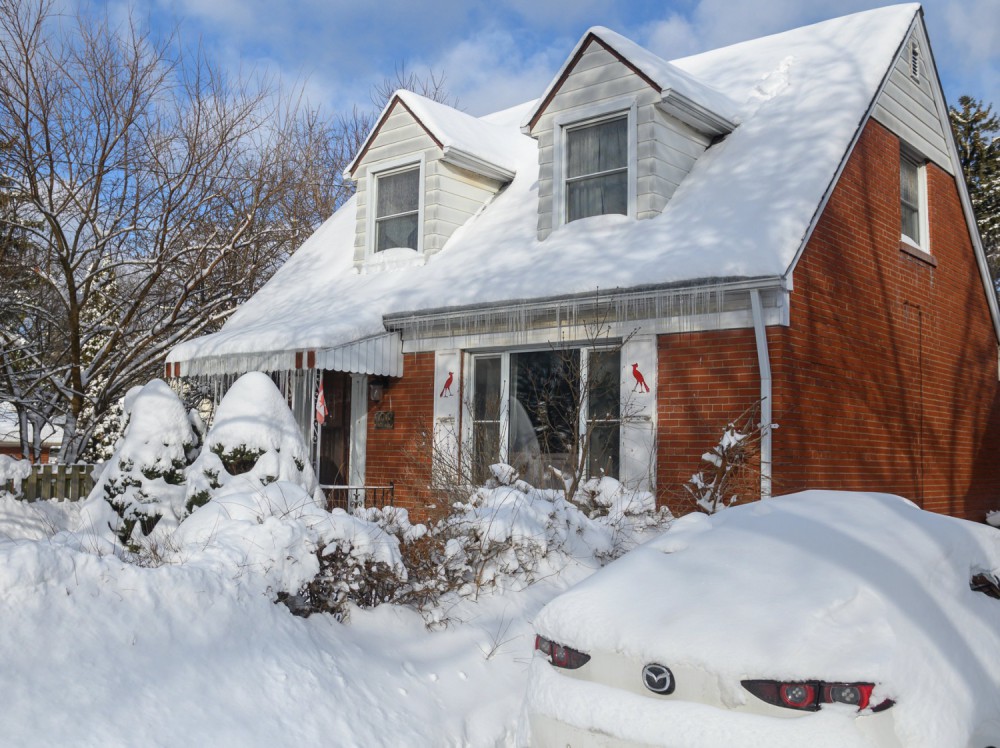
When winter rolls around in Québec, homeowners have to look after more than just shovelling the driveway. In fact, neglecting a certain number of small tasks can lead to damage (and potentially expensive repairs) and reduced energy efficiency. It could even compromise safety.
Here are seven things to keep an eye on during the cold months.
1. Air Leaks and Invisible Drafts
In winter, every little bit of cold outside air that gets in ends up on your power bill. In addition to saving you money, sealing cracks and gaps improves comfort levels and reduces condensation on windows, a common issue in homes during January and February.
What to do:
- Caulk doors and windows if they aren’t airtight.
- Replace any weatherstripping that’s become worn or hardened by the cold.
- If necessary, seal around indoor electrical outlets installed on exterior-facing walls.
Tip:
To easily identify air leaks, run a candle or a damp hand along the surface. A moving flame or a cool spot signals a draft.
2. The Roof: More than a Question of Snow
Removing the snow from a sloping roof (the most common roof type for homes across Québec) isn’t usually necessary, unless there’s a structural problem.
What homeowners should really watch out for are ice dams that prevent water from running properly away from the house. Ice dams often form around chimney outlets, skylights, and other obstacles.
Melting and runoff underneath the shingles can cause
- water infiltration in ceilings and down walls;
- mould and structural damage;
- falling ice, which can put people walking near the house at risk.
What to do (and not do):
Climbing onto the roof in winter is dangerous (very slippery), while breaking the ice with a shovel or spreading de-icing salt can harm the shingles. So, what should you do? The best thing is to contact a specialist company that has the equipment to carry out the job safely.
Tip:
Take advantage of the summer months to install roof heating cables designed to melt snow in winter. They will keep ice dams at bay!
3. The Gutter… Even in Winter
By autumn’s end, many homeowners stop thinking about their gutters, believing that since the leaves have stopped falling, cleaning season is over.
And yet, gutters can still become clogged in winter, by ice, for example. It can build up and weight down the gutters, warping sections and pulling out brackets. Without effective drainage, water can then overflow and seep down walls into the foundation, leading to a damp basement or cracks in the concrete that will worsen with freeze thaw cycles. The water can equally accumulate beneath the roofing causing leaks.
What to do:
- Gently scrape the snow blocking the gutters from the ground with a roof rake.
- Remove visible icicles from the roof’s edge (without hitting the gutters nor the roof).
- Keep the downspouts clear to stop the water from flowing back up onto the roof.
- Hire a specialist company to repair any damaged or broken gutter sections.
- Inspect the roof to ensure there’s no problem (see point 2).
Tip:
Install gutter guards (before the bad weather arrives) to prevent debris from accumulating it the gutters. They’re just as useful in winter!
4. Burst Pipes: An Underestimated Risk
Water pipes near exterior walls, in unheated garages, or under sinks are vulnerable to freezing. A frozen pipe can crack or burst… and the resulting water damage can prove one of the costliest repairs a homeowner may face!
What to do:
- Properly insulate exposed pipes (insulation sleeve, mineral wool insulation in cabinets).
- Seal cold drafts near plumbing outlets.
- Keep the sink cupboard’s doors open during cold spells to allow warmth in.
- Maintain a constant minimum temperature, even when absent (e.g., 10 °C).
- If the garage is equipped with plumbing, heat it slightly in very cold weather.
5. The Heating System: Beyond the Thermostat
To prevent breakdowns and ensure optimal system performance, regular maintenance is key.
What to do:
- Change or clean the filters in the system’s wall units (where the heat comes out) because as dust accumulates it can impair efficiency.
- Leave a gap between hot air outlets and furniture.
- Clear snow from the heat pump (outdoor unit).
6. Humidity: A Delicate Balance
In winter, a combination of dry outside air and constant indoor heating can often hurt air quality:
- Too dry = discomfort, cracking wood, static.
- Too humid = condensation, mould, frost on windows.
What to do:
Keep track of the humidity level (ideally between 30% and 40%) with a hygrometer and adjust the level as needed. Too humid? Use a dehumidifier, air out the house for a few minutes each day, and turn on the bathroom and kitchen fans when showering or cooking. Too dry? Run a humidifier or add moisture naturally (leave a bath filled with water overnight, air dry laundry indoors, etc.).
7. Points of Access and Egress: Safety First
Most homeowners typically shovel snow from their property’s front entrance promptly, but may forget secondary entrances, side stairs, and balconies, which is unsafe and can also result in damage.
Ice can weaken the structure of stairs (unless made of concrete). Balconies can collapse under the weight of heavy snow. That is why it’s best to clear snow and ice everywhere around your property, even from areas you don’t use in the winter!
Tip:
Were you aware that de-icing salt can damage your driveway’s surface? Rely on suitable abrasive materials instead, such as sand, gravel, or wood chips treated to provide grip over ice (less common, but good for the environment).
By taking the time to attend to these seven winter house maintenance tasks, you’ll protect both your home and your investment.