
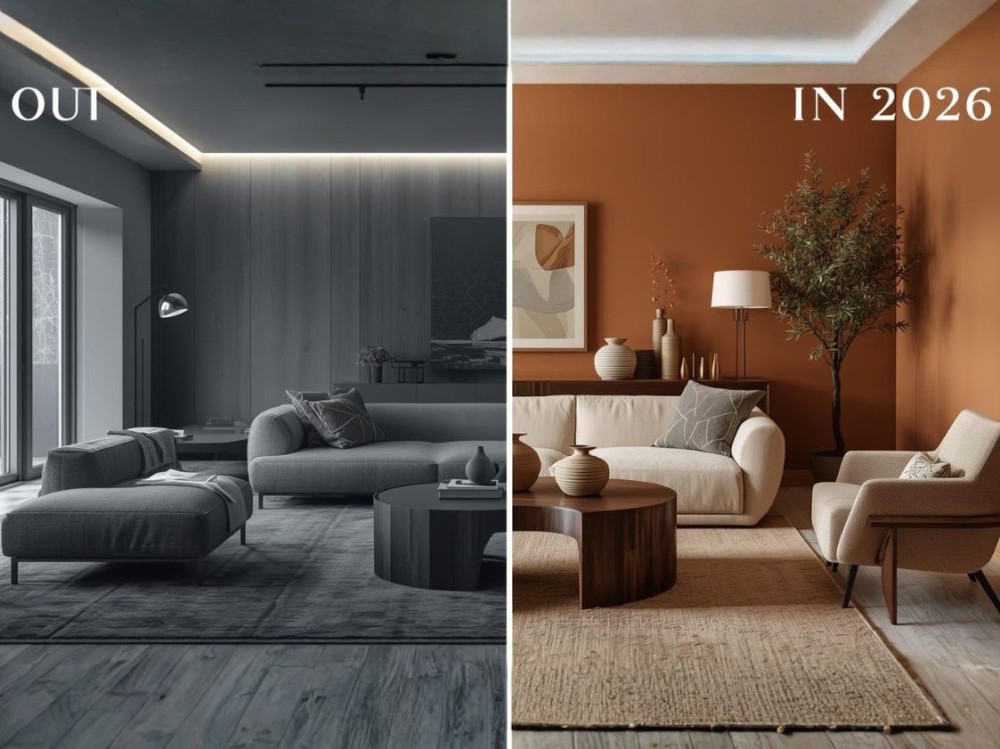
Interior decor trends don’t become outdated from one day to the next. They lose steam when lifestyles change, when materials age poorly, or when aesthetics no longer match the way we actually inhabit our spaces.
For 2026, what’s really set to drop in popularity are specific design aesthetics.
Ultra-Glossy Kitchens
High-gloss, handleless kitchens with black or white mirrorlike surfaces have long been considered avant-garde. But what once seemed sophisticated has quickly turned into a source of frustration with fingerprints, micro-scratches, and blinding reflections.
Aesthetically speaking, such kitchens have become emblematic of a specific time (the mid 2010s), which is exactly what buyers and renovators want to avoid.
In 2026, kitchens want to be more tactile with mat finishes, exposed wood, and proudly aged materials.
Perfectly Pinterest-Worthy Interiors
Social media and photo inspiration platforms have had an undeniable impact on home decor over the past decade or so.
The result: highly staged, eye-catching rooms created with little consideration for coziness and long-term appeal. The trends that are fading today are those that prioritized the “wow” effect at the expense of longevity, comfort, and harmony.
A Lack of Texture
Minimalism isn’t dead, but its purest form (bright white walls, smooth surfaces, almost total absence of texture) is clearly losing its appeal. These interiors, long associated with luxury and modernity, are now perceived as clinical, even anxiety-inducing.
These are visually empty rooms where the eye has nowhere to rest: no wood grain, no variation in colour, few shadows. In 2026, this type of decor is considered “flat,” devoid of sensory richness.
What’s taking its place are spaces enlivened by textures, lightly pigmented colours, and materials that change with lighting conditions.
The Accent Wall
The famous accent wall—usually a darker wall in an otherwise white room—is on the way out. Not because colour and texture have fallen out of favour, but because such a stark contrast now feels artificial and patchy.
In short, it reflects an overly simplistic approach to interior design: giving a space personality without considering the overall decor.
The colour palettes for 2026 focus on continuity: subtle variations of the same colour, applied to walls, ceilings, and sometimes the mouldings.
Overly Thematic Decors
Interiors designed around a single, very distinct theme tend to lose relevance quickly, as they leave little room for shifting tastes and changing needs. Think:
o Industrial
o Farmhouse
o Boho
o Scandinavian
These styles tell a unique story, but with no possibility of a next chapter. Conversely, the top decor trends for 2026 are designed to be adaptable, capable of accommodating new furniture, new colours, without altering their character.
The Faux Look
Artificial materials that seek to mimic nature but forget her endless variations, such as faux grey wood boards with a uniform grain or imitation marble with a regular veining pattern, quickly become outdated. Today’s discerning public can identify this class of materials at a glance and see in them short-term aesthetic compromises.
The issue isn’t so much the facts that these materials are replicas: it’s their lack of visual complexity.
In 2026, the preference is for simple yet authentic materials over sophisticated yet hollow imitations.
In essence, interior design over the coming years will be less ostentatious and more thoughtful—less spectacular, but more grounded. And it’s precisely this aesthetic maturity that will determine which trends will remain relevant… and which will fall by the wayside!