
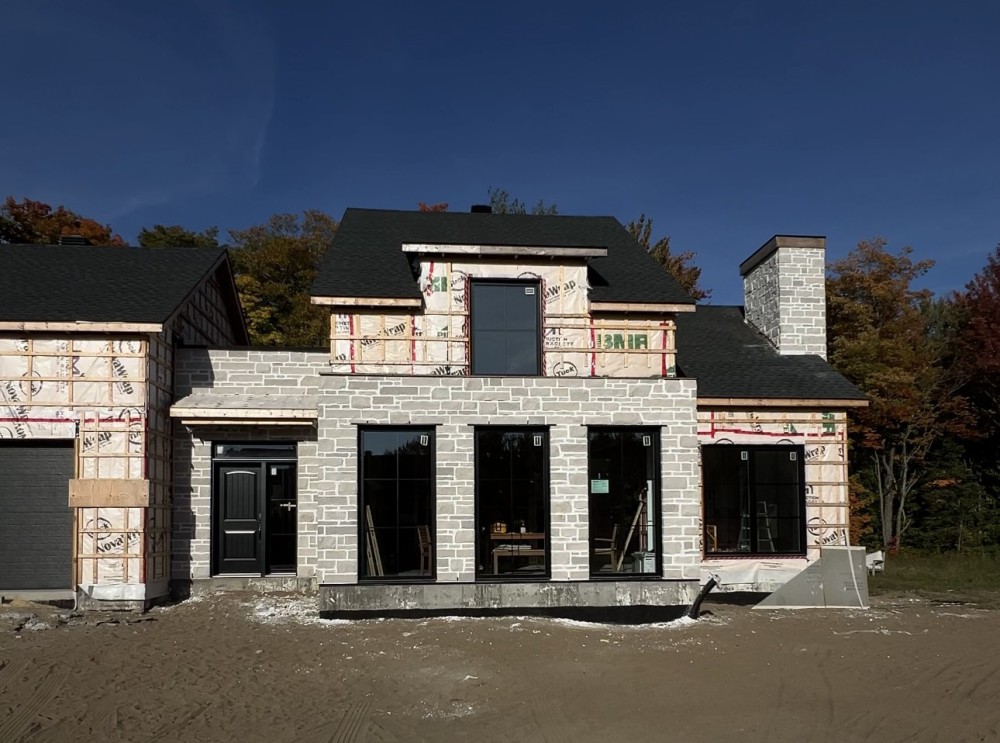
So, you’ve got the crazy idea to embark on a self-build and create your dream home. Of course, this isn’t a snap-your-fingers-and-it’s-done project—it requires lots of planning and preparation. And let’s face it, the budget is undoubtedly an aspect that leads to uncertainty and stress, and one that needs to be carefully overseen and managed.
Having now completed more than 95% of the self-build of my own home, I want to share some tips and tricks with you that allowed me to manage my budget efficiently, but also to anticipate unforeseen events/cost overruns during my construction.
At first glance, the reason behind the decision to self-build is probably the same for most people . . . to save costs! Indeed, this type of real estate project allows you to generate decent savings. Of course, several aspects come into play in order to make a self-build profitable. It is therefore essential to establish a budget before starting anything. This budget will serve as a benchmark throughout the entire project.
It can therefore be a good idea to create an Excel file in order to insert the breakdown of your budget. You’ll want to include such items as the foundation, the structure of the house/windows and doors, the plumbing/electricity, and the interior finish. There are some excellent online tools that can help you assign the right percentage to each stage of your construction. This step is not to be neglected! You’ll want a solid base in order to properly manage any surpluses.
There are a few tips that helped me build my dream home, all while respecting my budget along the way.
First of all, it’s crucial to dedicate a certain amount/percentage of the budget exclusively to the unexpected. This will avoid stress and being caught off guard when these unforeseen events come up. Yes, I know, it kind of sucks to have to provide a safety cushion you might not even end up using. If you don’t have to use this part of your budget, great! You can use it for your landscaping. Because no, the hard work doesn’t stop once construction does; you have the landscaping to look forward to the following year! And depending on your land, the costs can be quite exorbitant.
Now let’s talk finishing touches! If you have plans drawn up by a professional designer, that’s a major plus. Yes, it's an investment, but it’s an investment that pays off, as you’ll avoid common interior finishing mistakes. Especially if you're more or less comfortable with the technical decisions involved.
Be mindful of the “why not?” attitude. It’s so easy to give in to all your little temptations, convincing yourself that you can afford this “small expense.” But remember, all those small amounts quickly add up and can have you busting your budget in no time.
Even if you have a safety cushion in place, the unexpected can happen . . . and when it does, it can really throw you for a loop. Personally, when I ran into cost overruns during our self-build, I would immediately go into solution mode. There is always a solution! The easiest option is to refer to your budget worksheet and see in what other category you can reduce costs. In other words, you’ll have to make sacrifices to ensure the budget is respected.
To avoid surprises, be sure to include the purchase or rental of tools if you don't already have them. Get quotes to get the actual price and don’t trust people who tell you "it's about $2.50 per square foot" but whose price, in the end, doesn't include glue, moldings, or anything else... Take the time to provide the most accurate measurements and details to the supplier in order to have the most realistic price for the project or part to be finalized.
Finally, before embarking on a self-build, the essential question to ask yourself is: are you really able to do it yourself or will you end up having to pay a contractor to do the majority of the work? Do you have the patience to deal with the stress that a self-build can cause?
