
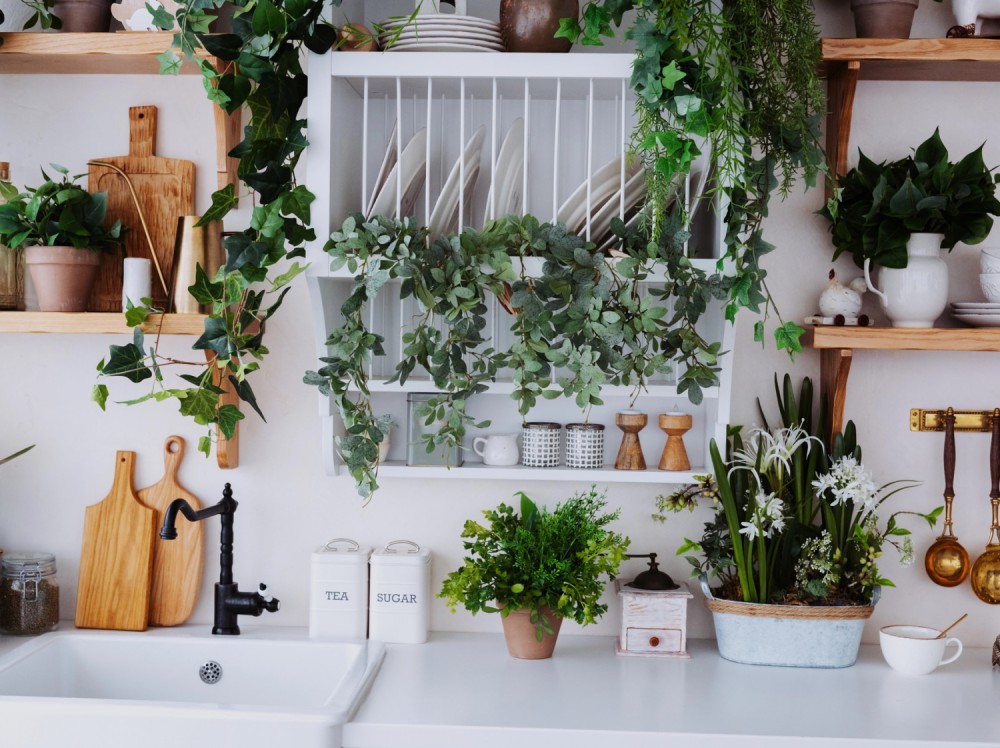
The idea of reconnecting humans and the natural world is gaining ground in real estate and interior decor. And this approach has a name: biophilic design.
It consists in transforming dwellings into healthier, calmer, and more stimulating environments. Doesn’t that sound great?
It’s therefore not surprising that both homeowners and tenants are embracing the concept as a means of improving their quality of life while bringing a unique touch of charm to their abodes.
Plants and Lots of Them
One of biophilic design’s core elements is, of course, giving plants a place in the home. And we don’t just mean two or three potted species placed in a corner!
Biophilic interiors truly seek to prioritize the presence of plants. For example, some homeowners
- convert an entire wall into a vertical garden, purifying the air while creating an impressive focal point;
- set up an indoor greenhouse attached to the kitchen so the cook always has fresh herbs at hand;
- cover every available horizontal surface with hardy houseplant varieties, such as pothos or sansevaria, to transform the atmosphere of a room in seconds.
Indeed, even a small space can benefit from a touch of greenery!
Rooms Bathed in Natural Light
Natural light constitutes another essential ingredient of the biophilic approach.
In Québec, where winters sometimes never seem to end, maximizing light is almost an art.
- Floor-to-ceiling windows visually connect the indoors with the outdoors.
- Skylights gently illuminate a home’s typically darker central rooms.
- In some projects, carefully positioned openings allow the rooms’ brightness to follow natural daylight cycles, regulating circadian rhythms and supporting energy levels throughout the day.
- Bathrooms with natural stone walls and lighting designed to mimic the effect of morning sunlight are also becoming increasingly popular, giving the bathroom the feel of an integrated home spa.
A Focus on Organic Materials
Unsurprisingly, organic materials equally play a role in this design philosophy.
Wood, rough stone, linen, wool, and clay lend rooms a warm and authentic atmosphere. A house that makes use of these textures instantly gains character!
More and more homeowners are opting for solid wood countertops, floors made from native tree species, or lime-plastered walls to soften the acoustics.
These materials help our spaces both look and physically feel cozier and more inviting. They remind us of the natural environments to which we’re instinctively drawn.
Soothing Sensory Atmosphere
Integrating nature-inspired sounds and scents can instantly transform a home’s ambiance.
A small, gurgling fountain, the chirping of birds, or the smell of fresh herbs like lavender contribute to creating a bubble of calm.
Natural Sights
Even in the city, being able to gaze on something natural can immediately relieve stress. Whether it’s a small garden, a balcony full of potted plants, or simply a view of a tree through the window, a living environment is a pleasure to behold.
1. Some houses feature a glass-enclosed inner courtyard densely planted with ferns, recreating the feel of a forest retreat in the middle of the city
2. Other projects incorporate indoor paths surrounded by climbing or ground-level plants so that walking around the house becomes a sensory experience.
Tangible Health Benefits
Biophilic design isn’t just a question of decor, it also has an effect on well-being.
Studies show that an environment rich in natural elements reduces stress and increases concentration. In a home office, a large plant or an unobstructed view of the outdoors is enough to boost productivity. Children, for their part, often sleep better in a room filled with natural light and soft materials. It even offers physical health benefits thanks to improved air quality and more stable humidity levels.
Transforming your home or condo in this way doesn’t necessarily require a huge budget. It’s simply a matter of rearranging furniture to maximize light, choosing more natural textiles, or adding a few well-positioned living elements. The biophilic design approach’s primary aim, after all, is to encourage us to rethink how we related to our environment. And anyone can do that!