
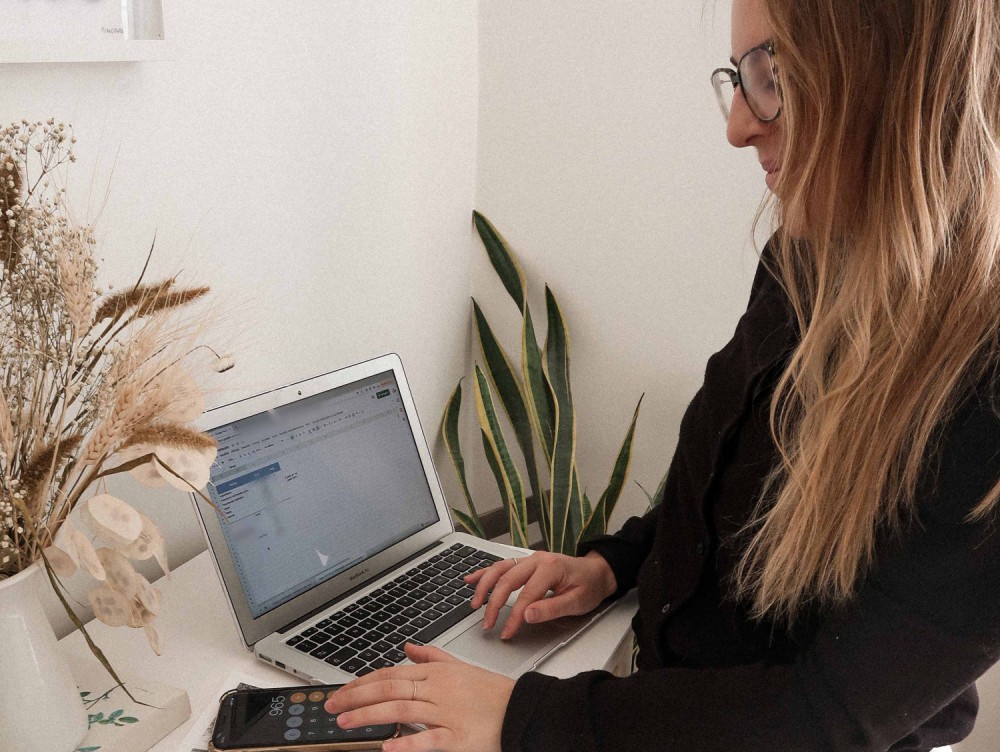
Recently, my spouse and I purchased our first home: a duplex that we'll be moving into this summer. You probably guessed that as someone who considers themselves to be a personal finance and budget enthusiast, I made sure to take every possible expense related to purchasing a property into consideration. Here are some ways that I'm budgeting for our very first home.
Use tools and resources to lay down the foundation
To make a budget, you need the right tools based on your needs. I'm the type who enjoys writing down all of my current expenses. But seeing as I'll be needing lots of information around rental income for year-end taxes, I try to keep things digital and use Excel tables instead. This makes it much easier to keep track of expenses and consolidate everything. I make sure to save the files to the cloud to keep track of what's important. Finally, I share every single document I’m working on with my partner so that he has access at all times.
Budgeting is personal, and you have to find a system that works for you. Check out free budgeting templates online or create your own that best suits your needs. I use two separate files: a monthly budget and a spreadsheet to help me calculate all my income and expenses.
Determining basic home costs
The good news is that the types of expenses that come with purchasing a home are more or less the same across the province. So, you already know a few categories like mortgage, home insurance, municipal and school taxes, and the cost of electricity right off the bat. If you aren't sure what those exact amounts are, you can always request quotes or call the city to find out what you'll pay in taxes and then do like us: after purchasing the property, we settled for monthly payments.
In the first Excel sheet — my monthly budget — I enter the exact amounts of the monthly recurring payments and their payment date. Then, I include the other expenses related to the property, such as internet, snow removal, parking, landscaping and anything else I might consider. This way, I'm aware of all of these expenses and what date they will be withdrawn from our account.
Purchases and work to come
Moving into your first home often requires you to spend on other expenses like furniture, decorating and painting — costs we often neglect to include in our budget. That's why I like to make a list of the things I need to buy and write out their approximate cost. I also try to prioritize everything in the order that I’ll need to be purchasing, and from there I save the required amount a few months in advance to avoid being caught off guard or use the credit card.
Concerning the work itself, the tasks at hand can be small or big — it depends on the size of your property. For us, our home is turnkey. There are a few around-the-house jobs that will need to get done, but fortunately, they are mainly for aesthetic or practical purposes. We have already calculated our budget — but we prefer to wait until we've moved in before going ahead with these. Then we'll decide the order of priority.
Set aside an amount for general building maintenance
Every year, you should set aside about 1% to 2% of the property's value for building maintenance and improvements. This means that for a $200,000 house, you should be saving around $2,000 and $4,000 annually, or $160 to $330/month —not an insignificant amount.
Planning for such helps curb any surprises along the way, especially in the first year of purchase.
All of these different expense items are detailed in my monthly Excel budget sheet. This makes it easier for us to set aside the required amounts throughout the year and pay for varying expenses, which change all the time.
Trying to plan for the unexpected is an opportune way to be better prepared financially when it comes time to buy your first home. After all, this is a joyful time and shouldn’t be a source of stress.
