
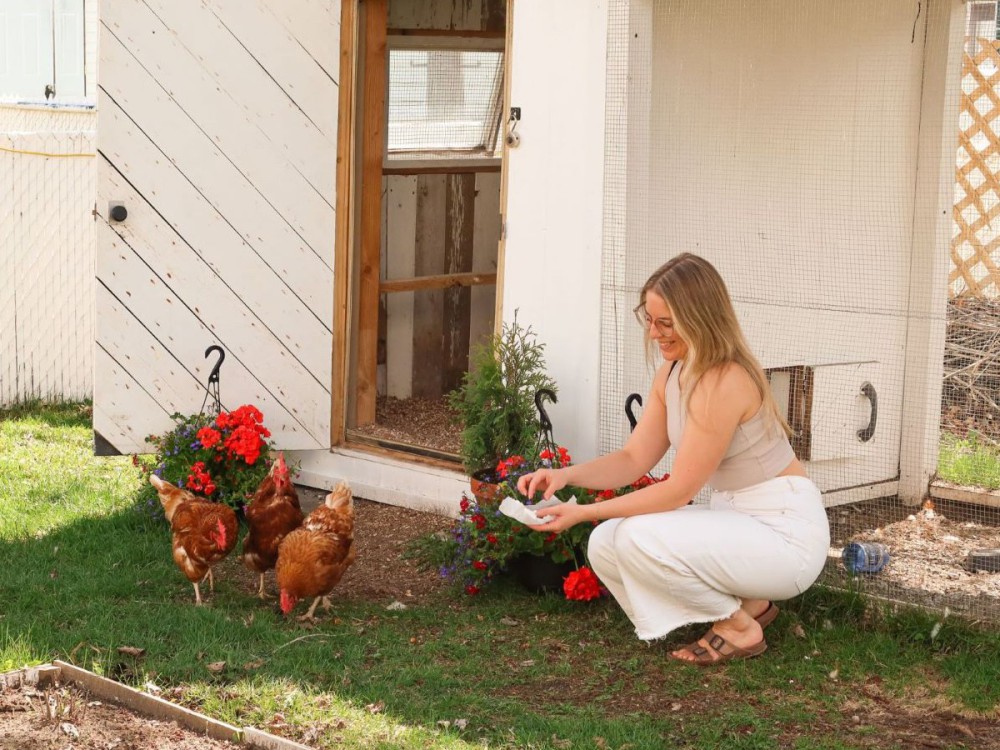
We adopted our first chickens in the summer of 2021, after building our chicken coop almost entirely from recycled materials. We performed a ton of research and training on the subject to ensure the chickens would be comfy in their coop during the summer and winter. Over time, we made a few improvements to the original design, such as with ventilation, summer heat, shelter from rain, flooding in springtime, etc. Whether you're a beginner or an experienced backyard chicken farmer, keep reading to discover these five tips and tricks we learned from our experience.
1-Ventilation
Ventilation is vital for controlling humidity levels and ensuring good air quality inside the coop—as it turns out, chickens are sensitive to both. Initially, we only had a vent at the top of the wall. But after enduring numerous hot summer days, we decided to add an opening mechanism for the window. This way, all we have to do is leave it open for most of the summer season. The temperature inside plummets at night—much to the delight of our lovely chickens. By the way, did you know that chickens can tolerate cold weather better than extreme heat?
2 - Space
The second essential element is space. Chickens love a little freedom to run, hunk, bask in the sun and bathe in the dust. If I were to start from scratch, I'd make it because they spend most of their time there. They're always outside! If you're unsure about the size of your coop, make it bigger than what's recommended. You won't regret it, and your chickens will love it.
3 - Protection
When I built the chicken coop, I was following a blueprint provided by someone who lived in the southern states of the U.S. In other words, their plans were different from what I needed. For example, their design didn't have a roof on top—that's unthinkable in the Canadian climate. Keeping our chickens sheltered from the elements is a must—especially considering all the rain come springtime. In the past few months, we've installed a roof, enabling them the freedom to enjoy the great outdoors even during inclement weather. We install winter plastic sheets to protect our precious hens from the cold and snow.
And then there are the predators. Keeping your chickens safe from wild and domestic predators is essential, even if you live in the city. Unfortunately, you can do little if a dog wants to play with them, but other than that, threats to chickens are few and far between. But this is why your chicken coop should be made from half-inch wire mesh buried into the ground. Windows and openings should also be fitted with protective grills.
4 - Insulation and heating
Another essential for your urban coop is insulation and heating. Although red hens can tolerate temperatures down to -10 °C, they need additional heating for extra comfort — and their survival — particularly when the temperature dips well below freezing. We insulated the entire coop with wool and opted for a 175 W heating bulb to heat the space, roughly 125 cubic feet (3.54 m³) in size. Even during a polar freeze, the chicken coop is stable at 0 °C, which is ideal. We don't want their water to freeze!
5 - Maintenance
Finally, housekeeping is the last essential element to consider for your urban henhouse! You need to keep the coop clean—picking up their droppings daily. That means ensuring it's the right size to crawl in there and tidy things up. Generally speaking, people prefer to build a henhouse of human height, into which it is possible to enter. Installing plates under the perches can make cleaning easier. Also, using removable plastic trays for the nesting boxes is ideal. The more chickens you have, the more maintenance you'll need. Just something to keep in mind.
An urban chicken coop is a big responsibility, requiring care and a few necessities. Proper ventilation will reduce humidity and heat, and room for your chickens to roam will promote a long, happy life. Don't forget to protect your chickens from predators and bad weather even if you live in the heart of downtown—after all, they spend most of their time outdoors!
If you want to keep your chickens happy during the winter, make sure to build a well-insulated coop and that there's a source of heat inside. When it comes to cleaning, make sure the enclosure you design is easy to clean. These necessities will ensure your chickens are well looked after—and live a pampered (and happy!) life.
